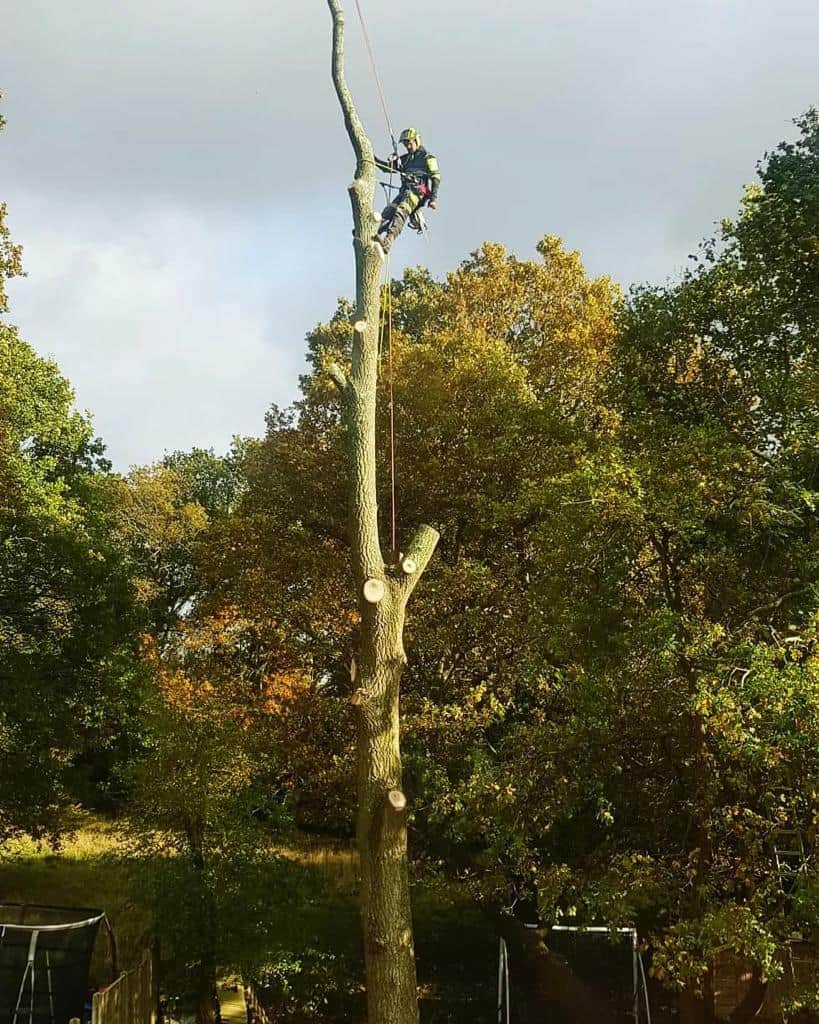
Arranging tree surgery can feel unfamiliar if you have not used the service before. The work may involve anything from selective pruning and crown reduction to deadwood removal or the controlled dismantling of an entire tree. Understanding the process helps you prepare your garden and know what to expect on the day.
For property owners in Midhurst, West Sussex, professional tree surgery should begin with a careful assessment and follow a planned approach suited to the tree, its surroundings and the required outcome.
What Happens During Professional Tree Surgery?
Tree surgery is not simply a matter of cutting branches. A tree surgeon must consider the tree’s condition, structure, species and location before deciding how the work should be completed.
The Process Begins With an Assessment
Before recommending any work, the tree surgeon will inspect the tree and discuss the reason for your enquiry. You may be concerned about excessive growth, reduced light, dead branches, an unbalanced canopy or a tree that appears unstable.
The assessment will usually consider:
- The species, size and condition of the tree
- Dead, damaged or crossing branches
- The balance and density of the crown
- Signs of decay, weakness or disease
- The position of nearby buildings and garden features
- Available access for workers and equipment
- The most appropriate tree surgery method
This allows the proposed work to address the actual problem without removing more healthy growth than necessary.
You Should Receive a Clear Explanation of the Work
Once the tree has been assessed, the recommended approach should be explained clearly. This may include crown reduction, crown thinning, formative pruning, deadwood removal or sectional dismantling.
A good explanation should set realistic expectations. For example, crown reduction should retain a natural-looking framework rather than leaving the tree with a harsh or uneven outline. The aim is to produce a suitable long-term result while respecting the tree’s health and natural form.
The Working Area Will Be Prepared
On the day of the work, the area around the tree will need to be kept clear. Vehicles, garden furniture, plant pots and other movable objects should be taken away from the working zone where possible.
The tree surgery team will organise the site to control access and create safe areas for lowering branches, operating equipment and processing waste. If the tree stands near a driveway, path or frequently used part of the garden, access may be temporarily restricted.
Different Trees Require Different Access Methods
Smaller trees may be managed using ladders and ground-based equipment. Larger trees can require professional climbing techniques, ropes or suitable access machinery.
The method chosen depends on the tree’s height, condition and surrounding space. A weakened tree may not be suitable for normal climbing, while restricted access may require branches to be removed and lowered in smaller sections.
Branches May Be Lowered in a Controlled Manner
Where there is sufficient open space, smaller branches may be removed directly into a designated working area. When buildings, fencing, planting or other features are nearby, ropes and rigging equipment may be used to lower sections carefully.
Controlled lowering gives the team greater management over the direction and speed of each removed section. This is particularly important when working on large trees in confined gardens.
Some Noise and Disruption Are Unavoidable
Tree surgery commonly involves chainsaws, wood chippers and other machinery, so a degree of noise should be expected. The length of the work will depend on the tree’s size, accessibility and the complexity of the task.
Professional planning helps keep disruption organised. Branches are normally processed progressively rather than left to accumulate throughout the garden.
The Tree’s Appearance May Change Gradually
Freshly pruned trees can look more open immediately after the work. Crown reduction and thinning alter the distribution of branches, although well-executed work should preserve a balanced shape.
The final appearance will also change as the tree produces new growth. Different species respond at different rates, so the tree surgeon should consider its likely reaction when deciding how much material to remove.
Arisings Will Be Managed After the Work
Tree surgery produces branches, logs, woodchip and smaller debris. Unless another arrangement has been made, the working area is generally cleared after completion.
It is helpful to discuss in advance whether you want suitable logs or woodchip retained. Otherwise, the resulting material can be processed and removed as part of the organised site clearance.
Aftercare May Be Recommended
Many established trees require little intervention immediately after appropriate pruning. However, the tree surgeon may advise monitoring new growth, arranging future maintenance or reassessing a particular branch union.
Young trees may benefit from further formative pruning as they develop. Large mature trees may need periodic inspections, particularly if deadwood or structural weakness has previously been identified.
Avoid attempting additional pruning yourself immediately after the work. Removing further branches could affect the tree’s balance or place it under unnecessary stress.
Choosing the Right Level of Work Matters
Professional tree surgery should be proportionate to the condition of the tree and the purpose of the work. Excessive cutting can encourage dense regrowth, weaken branch structure and reduce the tree’s natural appearance.
An experienced tree surgeon will aim to solve the identified problem while retaining suitable healthy growth wherever possible. Complete removal should generally be considered only when it is necessary for the tree’s condition, location or the intended use of the space.
Conclusion
When having tree surgery carried out, you should expect an initial assessment, a clear work plan, careful preparation and controlled removal of the necessary branches or tree sections. The site should also be left orderly, with any relevant aftercare explained.
LM Tree Surgery Midhurst provides professional tree surgery in Midhurst, West Sussex. If a tree in your garden needs pruning, reshaping or a more detailed assessment, contact us to discuss the most suitable approach.
Call us on: 01730 771 392
Click here to find out more about LM Tree Surgery Midhurst
Click here to complete our contact form and see how we can help with your tree’s needs.